Your potential customers are asking ChatGPT, Perplexity, and Google's AI Overviews where to find solutions to their problems. The question is: are those AI systems recommending your business, or your competitors?
Answer engine optimization (AEO) is the practice of structuring your content so AI-powered search platforms recognize, extract, and cite your business as a trusted source. Unlike traditional SEO, which optimizes for ranking positions on a search results page, AEO focuses on being the answer itself—appearing directly in AI-generated responses, featured snippets, and conversational search results. Businesses that master AEO best practices now will capture the traffic shifting from traditional search to AI-first discovery.
At Sting Marketing's AEO practice, we've been tracking this shift since GPT-4 changed how millions of people search. This guide breaks down exactly what's working in 2025—the strategic principles, the technical requirements, and the content frameworks that get businesses cited by AI assistants.
Why Answer Engine Optimization Matters Now
The numbers tell a clear story. According to SparkToro's 2024 research, nearly 60% of Google searches now end without a click to any website—users get their answer directly from featured snippets, knowledge panels, and AI Overviews. Meanwhile, ChatGPT processes over 100 million queries weekly, and Perplexity AI has grown 800% year-over-year in search volume.
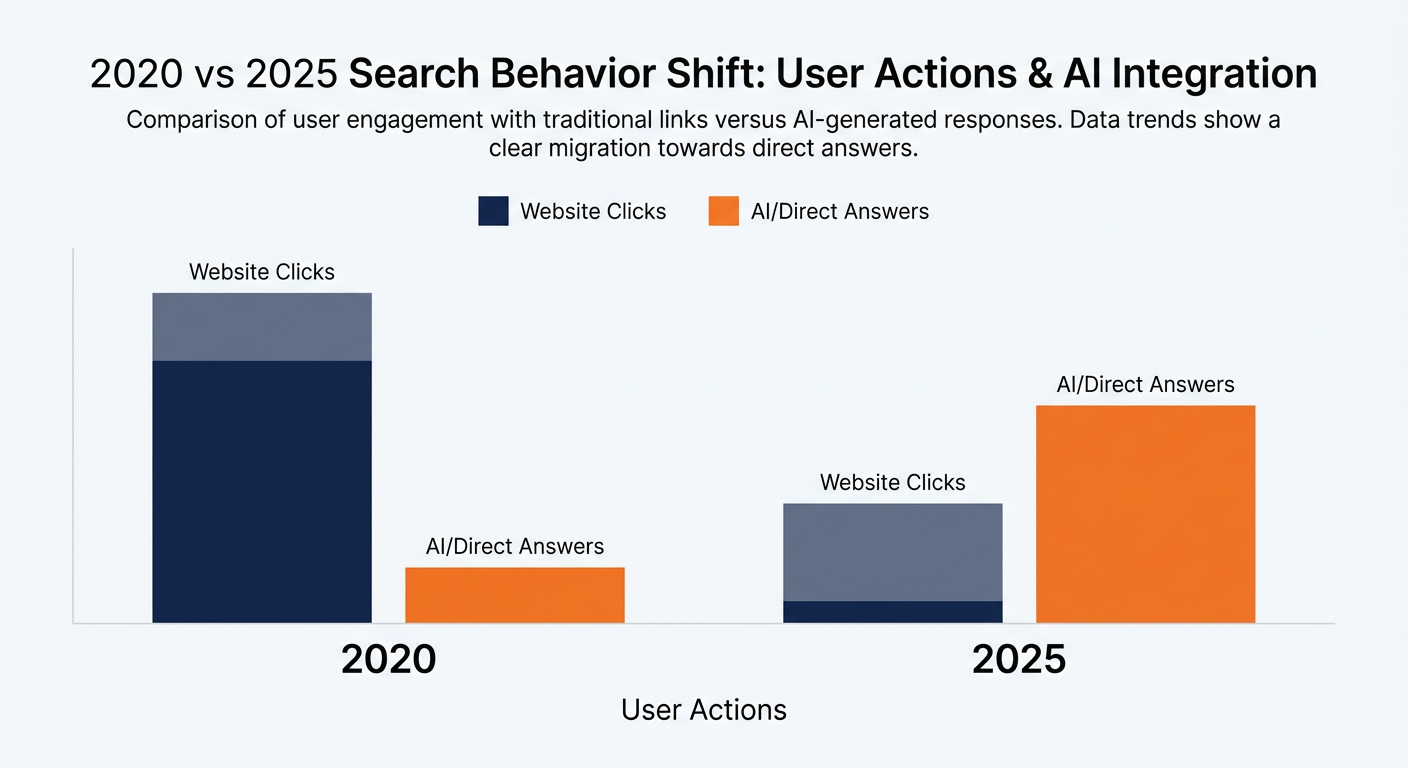
This isn't a future trend. It's current reality affecting your lead pipeline right now.
For the growth-focused businesses we work with—law firms, medical practices, insurance agencies, home builders, and e-commerce brands—the implications are significant. When a potential client asks an AI assistant "Who's the best personal injury lawyer in Phoenix?" or "What roofing company should I use for a tile roof replacement?", that AI is synthesizing information from across the web and presenting a curated recommendation.
- Content structured for extraction—clear answers, organized data, logical hierarchies
- Strong E-E-A-T signals—demonstrated expertise, real-world experience, authoritative sourcing
- Consistent NAP and entity data across the web—AI systems verify information across multiple sources
- Technical foundations that allow AI crawlers to understand and index content efficiently
The businesses getting ignored? They're still optimizing for 2019—keyword density, thin content, and link schemes that might have worked for traditional rankings but provide nothing for AI systems to extract and cite.
Here's what most businesses get wrong: they treat AEO as separate from SEO. In reality, the two disciplines reinforce each other. The content structure that helps Google's AI Overview extract your answer also helps your page rank in traditional organic results. The technical SEO foundations that support crawlability for Googlebot also support the retrieval systems that power ChatGPT and Perplexity.
The Strategy: How to Optimize for AI Search Visibility
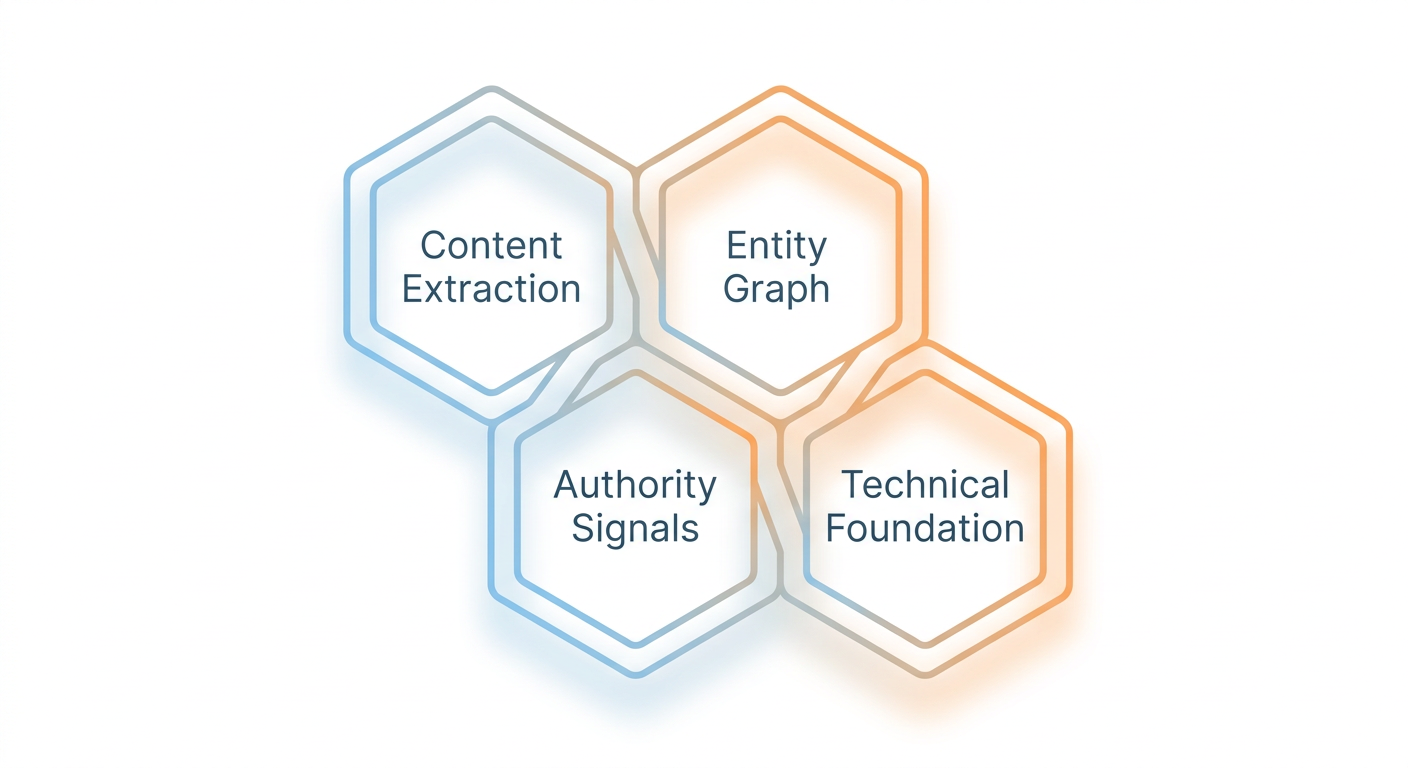
Effective generative engine optimization isn't a single tactic—it's a framework built on four interconnected pillars. When we audit clients' AEO readiness, we evaluate each of these components and identify which gaps are costing them AI visibility.
Pillar 1: Content That Answers Questions Directly
AI answer engines work by retrieving relevant content passages and synthesizing them into responses. The content that gets retrieved shares a common pattern: it answers specific questions clearly and completely within the first 40-60 words of a section.
This is different from traditional SEO content, which often buries the answer beneath introductory paragraphs designed to increase time on page. AI systems don't care about your clever hook. They want the answer.
When we develop content strategy for AEO, we start with question mapping:
- What specific questions is your target audience asking AI assistants?
- Which of those questions represent high commercial intent (someone ready to buy)?
- What does a complete, authoritative answer look like for each question?
Then we structure content so each question gets a direct answer in the opening of its section, followed by supporting context, evidence, and related information. The direct answer becomes the extractable snippet. The supporting content builds authority and depth.
Pillar 2: Entity Optimization and Structured Data
AI systems don't just read your content—they build entity graphs that map relationships between concepts, businesses, people, and attributes. Your business is an entity. Your products and services are entities. Your leadership team members are entities.
Strong entity optimization means ensuring AI systems can accurately identify and categorize these entities:
- Schema markup—LocalBusiness, Organization, Product, Service, Person, and FAQ schema help AI systems understand what your content represents
- Consistent entity data—your business name, address, phone number, and service descriptions should be identical across your website, Google Business Profile, LinkedIn, industry directories, and any platform AI systems might reference
- Knowledge panel optimization—if your business or key personnel have Google Knowledge Panels, ensure they're complete and accurate
According to Google's structured data documentation, properly implemented schema doesn't just help traditional search—it's the foundation for AI systems understanding your content at scale.
Pillar 3: Authority and Citation Building
AI answer engines don't cite random websites. They cite sources they've identified as authoritative on specific topics. Building that authority requires a different approach than traditional link building.
When we analyze which sources ChatGPT and Perplexity cite consistently, we see patterns:
- Original research and proprietary data that doesn't exist elsewhere
- Expert content with clear author bylines and verifiable credentials
- Coverage from industry publications and recognized media outlets
- Consistent, deep content on specific topic clusters rather than thin content across many topics
This is where the experience and expertise components of E-E-A-T become critical. AI systems are trained to identify and prioritize content from demonstrable experts. A blog post about medical SEO written by a marketing agency with healthcare clients and published case studies carries more weight than the same content from an anonymous content mill.
Pillar 4: Technical Infrastructure for AI Crawling
AI retrieval systems need to access and process your content efficiently. Technical issues that create minor friction for traditional Googlebot can completely block AI systems from extracting your content.
The technical foundations we evaluate in every visibility audit include:
- Crawlability—robots.txt configurations that allow AI crawlers (GPTBot, PerplexityBot, ClaudeBot) access to your content
- Page speed—slow pages may time out before AI systems can retrieve content
- Mobile optimization—AI systems often prioritize mobile-rendered versions of pages
- Clean HTML structure—semantic markup with proper heading hierarchies helps AI systems understand content organization
One technical detail most businesses overlook: checking their robots.txt to ensure they haven't accidentally blocked AI crawlers. We've seen clients who optimized everything else but blocked GPTBot in their robots.txt—meaning ChatGPT couldn't access their site at all.
Want to see how your business currently performs in AI search? Sting offers a free visibility audit that evaluates your presence across both traditional search engines and AI answer platforms. Schedule yours here or call (888) 858-7776.
Implementation Guide: Putting AEO Best Practices Into Action
Strategy without execution is just theory. Here's how to actually implement these best practices, prioritized by impact and effort.
Phase 1: Foundation (Days 1-30)
Audit your current AI visibility. Search for your brand name and key service queries in ChatGPT, Perplexity, and Google AI Overviews. Document where you're cited, where competitors appear instead, and where no authoritative answer exists yet (those are your opportunities).
Fix technical blockers. Review your robots.txt to ensure AI crawlers have access. Verify your schema markup is properly implemented using Google's Rich Results Test. Check that your site loads quickly and renders correctly on mobile.
Identify your top 10 questions. Using your existing analytics, customer service logs, and tools like AnswerThePublic or Semrush's Topic Research, identify the specific questions your target customers ask most frequently. These become your first content optimization targets.
Phase 2: Content Optimization (Days 30-90)
Restructure existing high-value pages. Take your top-performing organic pages and add clear, direct answers to the primary question each page addresses. Place these answers within the first 100 words of the relevant section using question-answer format.
Build topic clusters with authoritative depth. Rather than creating thin content across many topics, develop comprehensive coverage of 3-5 topic clusters where your business has genuine expertise. Each cluster should have a pillar page and 5-10 supporting pages that interlink.
Add FAQ sections with snippet-ready answers. Every service page and key content piece should include FAQs structured with FAQPage schema. Each answer should be 40-60 words, starting with a direct response to the question.
Phase 3: Authority Building (Days 90-180)
Develop original research or proprietary data. Conduct a customer survey, analyze industry trends from your own client data, or create benchmark reports. Original data gets cited because it can't be found elsewhere.
Secure expert bylines and media coverage. Pitch thought leadership content to industry publications. Get your subject matter experts quoted in relevant media coverage. These external mentions help AI systems verify your expertise.
Build consistent entity presence. Ensure your business information is identical and complete across your website, Google Business Profile, LinkedIn company page, industry directories, and anywhere else AI systems might look to verify your entity data.
Measuring Success: The KPIs That Matter
Traditional SEO metrics only tell part of the story. For AEO, we track additional indicators:
- AI citation frequency—how often your brand appears in ChatGPT, Perplexity, and AI Overview responses for target queries
- Featured snippet ownership—percentage of target questions where your content appears in position zero
- Branded AI queries—growth in queries where users ask AI specifically about your brand or products
- Referral traffic from AI platforms—direct visits from Perplexity, Bing Copilot, and other AI search tools
At Sting, we've built monitoring systems that track these metrics alongside traditional organic performance, giving our clients visibility into both channels simultaneously.
How Do I Know If AI Is Citing My Competitors Instead of Me?
Test your target queries directly in AI platforms. Ask ChatGPT, Perplexity, and Google's AI Overview the specific questions your customers ask when evaluating solutions in your category. Document which brands appear in the responses and analyze what those brands have that you don't—usually more comprehensive content, stronger authority signals, or better structured data.
This competitive AI audit is one of the first things we do with new clients. The results often reveal opportunities that traditional SEO analysis misses entirely.
Does Traditional SEO Still Matter If AI Is Changing Search?
Traditional SEO remains essential—it's the foundation that makes AEO possible. The same content quality, technical excellence, and authority signals that drive Google rankings also influence how AI systems evaluate and cite sources. The difference is that AEO adds an additional layer of optimization focused on content structure and extractability. Core SEO principles still apply—AEO extends them for a new context.
We don't recommend choosing between SEO and AEO. Businesses that optimize for both see compounding benefits: better traditional rankings, more featured snippet ownership, and increasing AI citations.
How Long Does Answer Engine Optimization Take to Show Results?
Initial AEO improvements typically show within 30-60 days for technical and structural changes, while authority-building produces results over 90-180 days. This timeline depends on your starting position, competitive landscape, and the quality of your existing content foundation. Businesses with strong traditional SEO assets often see faster AEO gains because the underlying authority is already established.
We structure our engagements around 90-day planning cycles, allowing us to measure progress, identify what's working, and adjust strategy based on real performance data.
Positioning for the Future of Search
The businesses capturing AI traffic today aren't waiting for the technology to mature—they're building the content assets, authority signals, and technical infrastructure that AI systems already prioritize.
This is the same pattern we've seen with every major search evolution: early adopters capture market share while competitors catch up. The difference now is that AI search is evolving faster than any previous shift, and the window for establishing authority is narrowing.
Whether you implement these AEO best practices in-house or work with a specialized team, the strategic direction is clear. Structure your content for extraction. Build demonstrable expertise and authority. Ensure your technical foundation supports AI discovery. And measure results across both traditional and AI search channels.
Ready to see where your business stands in AI search today? Contact Sting Marketing for a free visibility audit covering both Google and AI answer engines, or call us directly at (888) 858-7776.